

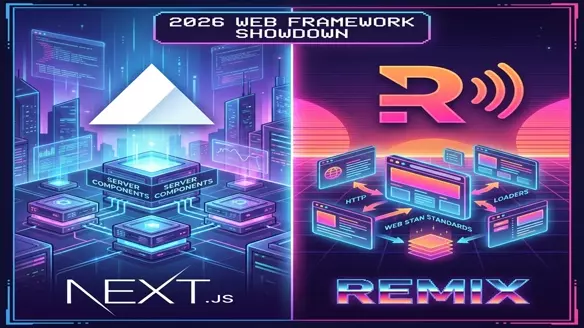
Next.js vs Remix: The 2026 State of React
In 2023, the debate was "Server Components vs Loaders". In 2026? It's "Vercel Ecosystem vs Web Standards".
Next.js (now version 16) is effectively the React OS. Remix (under Shopify) is the champion of "Use the Platform".
Quick Verdict
Choose Next.js if:
- You use Vercel. The integration is magical. Zero-config, edge functions, image optimization. It just works.
- You need Server Components (RSC). If you want to fetch data inside your component without a separate loader, Next.js is the pioneer.
- You are hiring. Next.js developers are everywhere. Remix devs are harder to find.
Choose Remix if:
- You hate "Magic". You prefer
FormData,Request, andResponseobjects (Standard Web APIs) over proprietary hooks. - Form handling is key. Remix's mutation story (
action->loaderrevalidation) is still cleaner than Next.js Server Actions for complex forms. - You deploy anywhere. Vercel is great, but Remix runs equally well on Cloudflare Workers, Fly.io, or a dusty VPS.
Critical Feature Breakdown
1. Data Fetching
- Next.js: Async components.
const data = await fetch(). Intuitive for backend devs. - Remix:
loaderfunctions. Decouples fetching from rendering. Prevents waterfalls by design, but feels "old school" to some.
2. Mutations (Forms)
- Next.js: Server Actions (
"use server"). Powerful, but can get messy with closures and client-side cache invalidation. - Remix: HTML Forms.
<Form method="post">. The browser handles the submission, Remix handles the reload. It feels incredibly robust.
3. Routing
- Next.js: App Router (File-system based).
page.tsx,layout.tsx,loading.tsx. Very structured. - Remix: Route Config (v2). cleaner file structure but requires understanding nested routing deeply.
The "Vercel" Factor
| Feature | Next.js | Remix |
|---|---|---|
| Vendor Lock-in | High (Features optimized for Vercel) | Low (Deploy tailored adapters) |
| Image Optimization | Native Component (Paid on Vercel) | Do it yourself (or use a service) |
| Middleware | Edge runtime specific | Standard Request handlers |
The Conclusion
- Next.js is for teams who want "The Standard Way". It's the safe bet, backed by Vercel's infinite war chest.
- Remix is for purists who want to understand how the web works. It produces developers who are better at the web, not just better at a framework.
My 2026 Pick: Start with Next.js for corporate apps. Use Remix for SaaS products where user interaction (forms/dashboards) is high.